
Project management can feel like juggling chainsaws—exciting, but high-risk. Whether you’re a seasoned professional or just starting, having a quick Project Management Cheat Sheet can keep your projects on track and prevent costly missteps.
Here is your essential, condensed Project Management Cheat Sheet covering the core phases, key tools, and crucial metrics of successful project management.
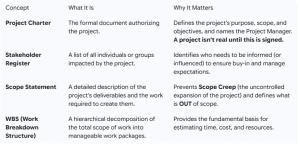
Phase 1: Initiation & Planning (The Blueprint)
This phase sets the stage. Without a solid foundation here, the entire project is unstable.
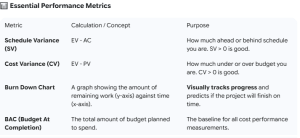
Phase 2: Execution & Monitoring (The Engine)
This is where the real work happens. Focus on communication, tracking, and risk response.
🛠️ Key Tools & Techniques
- Communication Plan: Defines who needs what information, when, and how. Always over-communicate critical updates.
- Risk Register: A living document listing potential risks, their probability/impact, and the planned mitigation (reducing impact) or contingency (what to do if it happens) responses.
- Kanban/Scrum Board: Visual tools (physical or digital) used to track task progress (To Do, In Progress, Done). Tip: Limit WIP (Work In Progress).
- Issue Log: Used to formally document, track, and resolve problems or roadblocks that occur during execution. Issues are materialized risks.
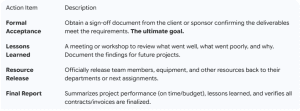
Phase 3: Closure (The Hand-Off)
Don’t skip this! Formal closure ensures the client accepts the deliverable and the team learns from the process.
Agile/Scrum Snapshot (The Flexible Approach)
If your project uses an Agile approach, remember these core elements:
- The Trinity: Product Owner (What to build), Scrum Master (How to build), Development Team (The builders).
- Sprints: Short, time-boxed iterations (usually 2-4 weeks) where a fixed set of work is completed.
- Daily Stand-up (Daily Scrum): A 15-minute meeting where each team member answers: 1) What did I do yesterday? 2) What will I do today? 3) Do I have any roadblocks?
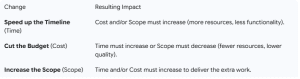
Golden Rule of PM: The Triple Constraint ⚖️
Remember that every project management effort is balanced by three interconnected constraints. You can’t change one without affecting the others.
If you try to…
Keep this Project Management Cheat Sheet handy to quickly reference best practices and make informed decisions, ensuring you keep your projects on time, on budget, and on track for success!