
CAPM – Certified associate Project Manager Certification Training
Categories
Agile and Project Management
$49 – $1,899Price range: $49 through $1,899
$49
-
LevelIntermediate
-
Duration32 hours
-
Last UpdatedJanuary 14, 2026
Hi, Welcome back!
Pre-Requisites
- Secondary degree (high school diploma or equivalent)
- Completion of 23 hours of project management education
- Stable internet connection for online sessions
- Exam fee is not included in the course fee
- Commitment to attend sessions and complete practice tests
Who Should Enroll
- Students and fresh graduates
- Early-career professionals entering project management
- Professionals with limited project management experience
- Individuals preparing for PMI’s CAPM® certification
- Anyone looking to build a strong project management foundation
Courseware Includes
- 32 hours of intensive CAPM training
- Instructor-led live online sessions
- 23 contact hours certificate (PMI eligibility)
- CAPM practice tests and mock exams
- Digital courseware and downloadable resources
- Chapter-end quizzes and real-life case studies
- CAPM application assistance
- 90 days of e-learning access
- 24/7 learner support
Description
CAPM® (Certified Associate in Project Management) Certification Training is a beginner-level program designed for aspiring project managers and professionals with little or no prior experience. This course is aligned with PMI’s PMBOK® Guide and prepares learners to confidently clear the CAPM exam.
Delivered through interactive live sessions and supported by digital learning resources, this training builds a strong foundation in project management concepts, tools, and techniques. It is ideal for students, entry-level professionals, and anyone planning to start a career in project management.
FAQs
Does the course fee include the examination fee as well ?
Exam fee is not included in the course fee and the user will have to pay an exam fee to appear for CAPM certification exam.
Will I get the CAPM® certificate after completing this CAPM® certification course ?
On completing the CAPM Training course from Certification Guide, you will get a contact hours (PDU’s) certificate from Certification Guide. CAPM certification can be obtained by appearing for the PMI Certified CAPM exam.
Does Certification Guide offers 100% money back guarantee ?
Yes, we offer 100% money back guarantee on our CAPM training. CLICK HERE to know more about the money back guarantee.
What kind of course completion certificate is provided after the training ?
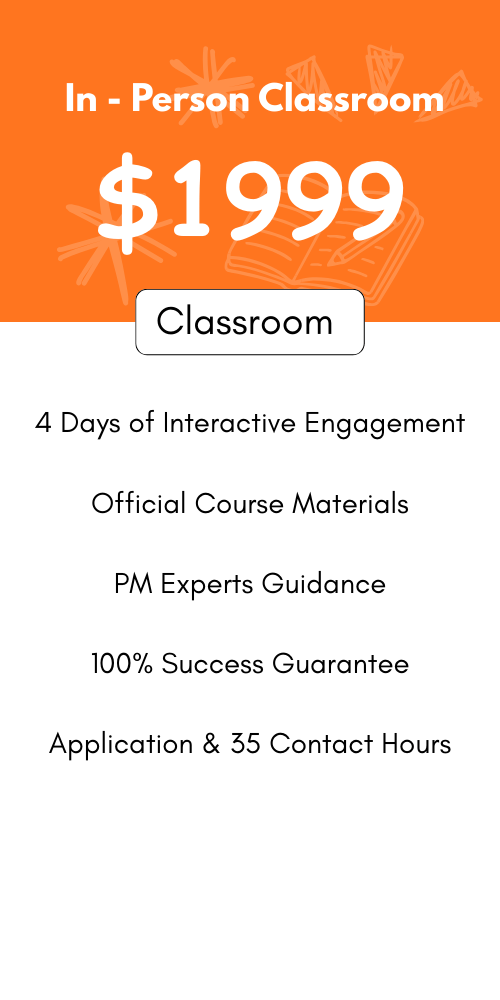
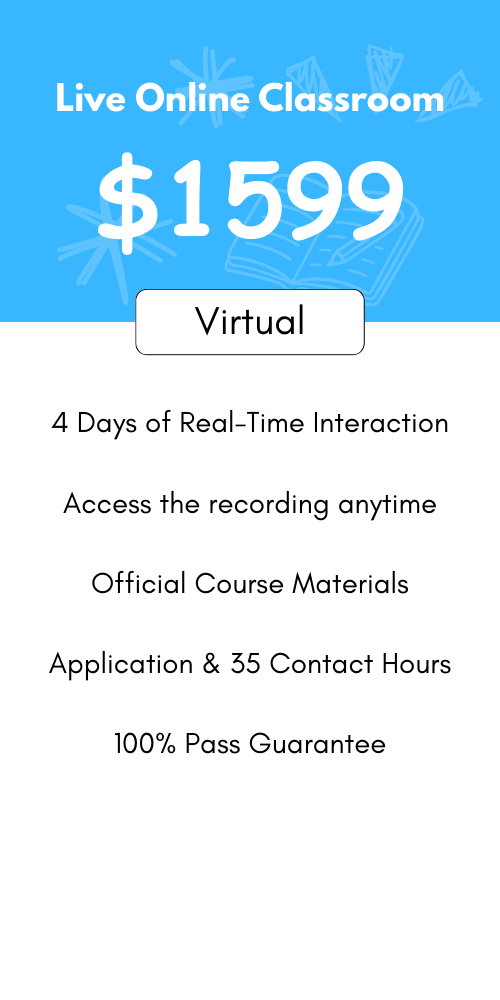
On completion of 4 days of In-person/online training, you will receive a 35 contact hours certificate. Certificate soft copy will be mailed to your registered email address within 48 hours of course completion.
How long the course materials access will be provided ?
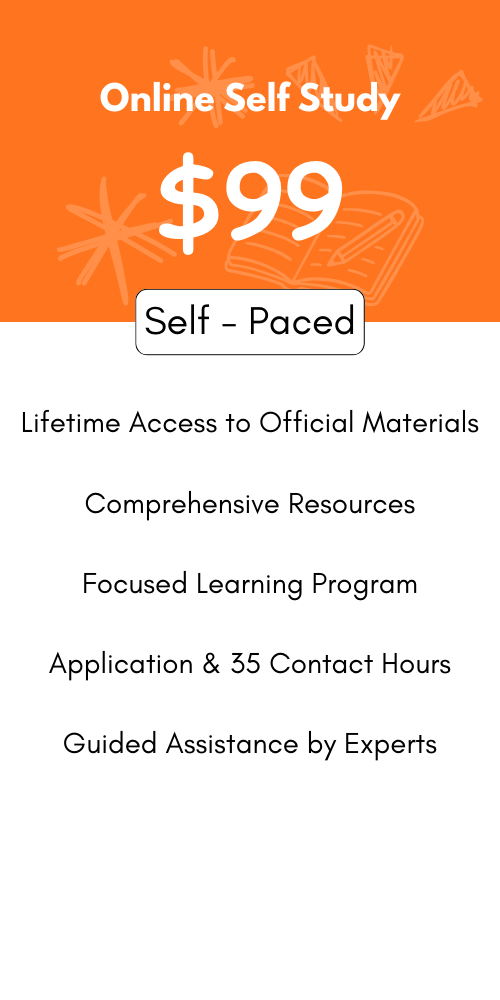
All registered participants will receive a link to download the courseware from Dropbox. Once downloaded, you will have lifetime single-user access to the CG course material.
When will I receive the course location and the workshop details ?
Registration confirmation email and the courseware access will be shared immediately after the registration. Other details such as location, venue, timing’s. do’s and don’ts will shared 5 day prior for in-person classroom training and link to join the class, timing’s (time zone) details will be shared 24 our prior to the class.
How do I reschedule OR cancel enrolment ?
Absolutely yes, you need to drop an email to with your request, and depending upon when you raise a refund or rescheduling request, a fee will be applicable. To learn more, please read our refund policy.
What I will learn?
- Understand project life cycles, processes, and key PM concepts
- Learn project scope, schedule, cost, quality, risk, and stakeholder management
- Apply essential project management tools and techniques
- Prepare effectively for the CAPM® certification exam
- Gain confidence to manage projects at an entry level
Course Agenda
Module 01 : Project Management Framework
-
What is a Project?
-
Programs, PMO, and Portfolios
-
Project Stake holders
-
Organizational Structures
-
Product Life Cycle, Project Life Cycle, Project Management Life Cycle
-
Process Groups
-
Key General Management Skills
Module 02 : Project Integration Management
-
What is Project Integration Management?
-
Some Examples of Integration Processes
-
Earned Value Analysis
-
Project Constraints
-
Project Assumptions
-
Project Charter
-
When should the Project Manager be Identified/Assigned?
-
Project Management Plan, Project Schedule, and Performance Measurement Baseline
-
Components of the Project Plan
-
Preventive Action, Corrective Action, and Defect Repair
-
Work Authorization System
-
Role of Stakeholder
-
Project Management Information System (PMIS)
-
Lessons Learned
-
Change Control System
-
Perform Integrated Change Control
-
Steps Followed If Customer Requests for Changes
-
Guiding Rule – Who Can Authorize A Change?
-
Configuration Management System
Module 03 : Project Scope Management
-
What is Project Scope Management?
-
Product Scope vs. Project Scope
-
Processes in Project Scope Management
-
Plan Scope Management
-
Scope Management Plan
-
Collect Requirements
-
Define Scope
-
Product Scope Description
-
Product Analysis
-
Project Scope Statement
-
Decomposition
-
Work Breakdown Structures (WBS)
-
Work Packages and WBS Dictionary
-
Inspection
-
Scope Changes
-
Control Scope
Module 04 : Project Time Management
-
What is Project Time Management?
-
Plan Schedule Management
-
Define Activities
-
Decomposition
-
Sequence Activities
-
Precedence Diagramming Method (PDM)
-
Activity on Node
-
Conditional Diagramming Methods
-
Types of Dependencies
-
Project Schedule Network Diagrams
-
Estimate Activity Resources
-
Outputs of Estimate Activity Resources
-
Estimate Activity Durations
-
Historical Information
-
Analogous Estimating (Top-Down Estimating)
-
Parametric Estimating
-
Three-Point Estimating
-
Develop Schedule
-
Constraints and Milestones
-
Mathematical Analysis
-
Schedule Compression
-
Simulation, Resource Leveling, and Critical Chain Method
-
Resource Smoothing
-
Project Schedule
-
Schedule Updates, Schedule Baseline, and New Target Schedules
-
PERT Estimations
-
Tasks in Network Diagrams
-
How to Calculate Critical Path for a Network Diagram
-
Performing Network Analysis
-
Crashing
-
Time Management Questions – Practice
Module 05 : Project Cost Management
-
What is Project Cost Management?
-
Plan Cost Management
-
Cost Management Plan
-
Estimate Costs
-
Estimate Costs – Tools and Techniques
-
Analogous Estimating (Top Down)
-
Bottom-Up Estimating
-
Parametric Estimating
-
Three-Point Estimating
-
Activity Cost Estimates
-
AACE – Types of Estimates
-
Determine Budget
-
Project Schedule and Resource Calendars
-
Cost Baseline
-
Revised Cost Estimates, Budget Updates, Re-baselining
-
Control Costs
-
Control Costs – Tools and Techniques
-
Payback Period and Life Cycle Cost
-
Return on investment (ROI)
-
Present Value, NPV and DCF
-
Internal Rate of Return (IRR)
-
Benefit Cost Ratio (BCR)
-
Opportunity Cost and Sunk Cost
-
Depreciation
-
Earned Value Management
Module 06 : Project Quality Management
-
What is Project Quality Management?
-
Quality
-
Quality Policy
-
Flowchart
-
Quality Management Plan
-
Perform Quality Assurance
-
Control Quality
-
Tools and Techniques used for Control Quality
-
Seven Basic Quality Tools
Module 07 : Project Human Resource Management
-
What is Project Human Resource Management?
-
Plan Human Resource Management
-
Human Resource Management Plan
-
Acquire Project Team
-
Develop Project Team
-
Manage Project Team
-
Handling Conflicts
-
Maslow’s Hierarchy of Needs
-
Herzberg’s Theory of Motivators and Hygiene Factors
-
Conflict Intensity
-
Management/Leadership Styles
-
Types of Roles People Play in a Project
-
Delegation
Module 08 : Project Communications Management
-
What is Project Communications Management?
-
Importance of Communications Management
-
Various Forms of Communication and Their Characteristics
-
Plan Communications Management
-
Communications Management Plan
-
Plan Communications Management – Tools and Techniques
-
Manage Communications
-
Control Communications
Module 09 : Project Risk Management
-
What is Project Risk Management?
-
Plan Risk Management
-
Risk Management Plan
-
Identify Risks
-
Perform Qualitative Risk Analysis
-
Perform Quantitative Risk Analysis
-
Plan Risk Responses
-
Control Risks
-
Utility Function
Module 10 : Project Procurement Management
-
What is Project Procurement Management
-
Understanding Terms and Concepts
-
Plan Procurement Management
-
Make or Buy Analysis
-
Contract Type Selection
-
Types of Contracts
-
Important Fixed Price Contracts
-
Important Cost Reimbursable Contracts
-
Procurement Management Plan
-
Conduct Procurements
-
Control Procurements
-
Close Procurements
Module 11 : Project Stakeholder Management
-
Project Stakeholder Management
-
Identify Stakeholders
-
Plan Stakeholder Management
-
Stakeholder Management Plan
-
Manage Stakeholder Engagement
-
Control Stakeholder Engagement
Module 12 : Professional Responsibility
-
Responsibility towards PMI
-
Responsibility to the Profession
Student Ratings & Reviews

No Review Yet