
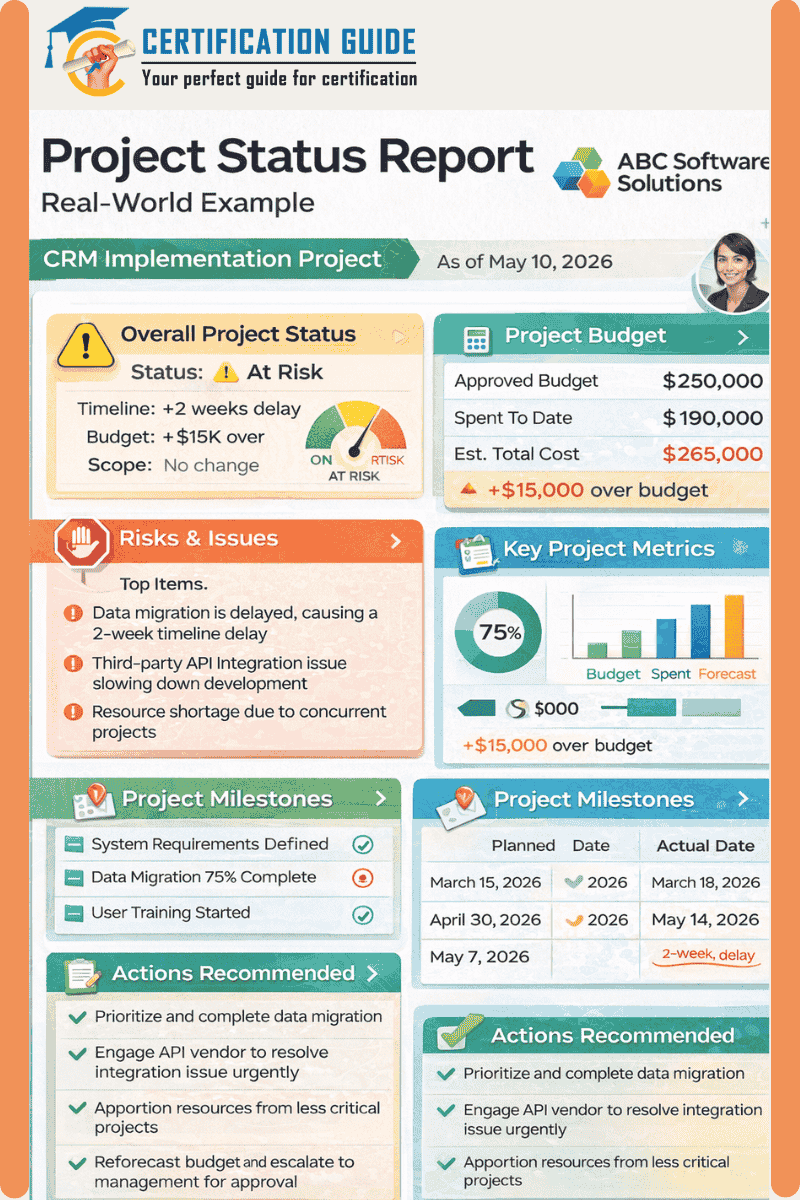
A Project Status Report is one of the most important communication tools in project management. It keeps stakeholders informed, highlights progress, identifies risks early, and ensures everyone stays aligned with project goals.
In this blog, you’ll learn what a project status report is, why it matters, what to include, and see a real-world project status report example you can use as a reference.
What Is a Project Status Report?
A Project Status Report is a structured document that provides an overview of a project’s:
- Current progress
- Schedule and budget status
- Risks and issues
- Next steps
It is typically shared weekly, bi-weekly, or monthly with stakeholders, sponsors, and team members.
Why Is a Project Status Report Important?
A well-prepared project status report helps to:
- Improve transparency and trust
- Identify risks before they become critical issues
- Support informed decision-making
- Keep stakeholders aligned with project objectives
- Track progress against scope, schedule, and cost
Without regular status reporting, projects are more likely to face delays, cost overruns, and miscommunication.
Key Components of a Project Status Report
An effective project status report usually includes the following sections:
1. Project Overview
- Project name
- Project manager
- Reporting period
- Overall project status (On Track, At Risk, Off Track)
2. Progress Summary
- Key accomplishments during the reporting period
- Completed milestones
- Ongoing tasks
3. Schedule Status
- Planned vs actual timeline
- Upcoming milestones
- Any schedule delays or changes
4. Budget Status
- Approved budget
- Actual spend to date
- Forecasted cost at completion
5. Risks and Issues
- Identified risks
- Active issues impacting the project
- Mitigation or resolution actions
6. Next Steps
- Planned activities for the next reporting period
- Key deliverables
7. Support or Decisions Needed
- Approvals required
- Escalations or management support needed
Real-World Project Status Report Example
Below is a practical example of a project status report for a real-world scenario.
Project Status Report – Website Redesign Project
Project Name: Corporate Website Redesign
Project Manager: Sarah Johnson
Reporting Period: June 1 – June 15, 2026
Overall Status: 🟡 At Risk
Progress Summary
- Homepage and landing page designs completed
- Content migration completed for 70% of pages
- User acceptance testing started for core pages
Schedule Status
- Planned Completion Date: July 31, 2026
- Current Forecast: August 7, 2026
- Status: One-week delay due to late content approvals
Budget Status
- Approved Budget: $120,000
- Actual Spend to Date: $78,500
- Forecast at Completion: $125,000
- Status: Slight budget overrun expected
Risks and Issues
- Risk: Delays in content review from stakeholders
- Mitigation: Weekly review meetings scheduled
- Issue: Third-party plugin compatibility issue
- Resolution: Vendor support engaged
Next Steps
- Complete remaining content migration
- Resolve plugin compatibility issue
- Conduct full UAT testing
- Prepare go-live checklist
Support Needed
- Faster content approvals from business stakeholders
- Budget approval for additional plugin licensing
Best Practices for Writing Project Status Reports
To make your project status reports effective:
- Keep the report concise and factual
- Use clear status indicators (Green / Yellow / Red)
- Highlight risks early, not after they escalate
- Focus on what stakeholders need to know
- Be consistent with format and frequency
Common Mistakes to Avoid
- Being overly optimistic and hiding risks
- Using technical jargon for executive stakeholders
- Reporting too much detail instead of key insights
- Failing to include next steps or action items
Conclusion
A Project Status Report is more than a routine update—it’s a strategic communication tool that helps ensure project success. By following a clear structure and using real-world data, project managers can keep stakeholders informed, aligned, and confident in the project’s progress.
Whether you manage IT projects, construction initiatives, or business transformations, consistent and transparent status reporting is a key skill every project manager should master.
✅ Pro Tip
If you’re preparing for PMP® Certification, understanding how to create effective project status reports is essential, as it aligns directly with stakeholder communication and performance reporting best practices outlined by PMI.